
Dear Friend,
All things must pass. So sings George Harrison, in one of my favorite songs (by one of my favorite singer-songwriters). Seeing as how this post comes about a week after the planned response date, it probably goes without saying that things–big things, little things; personal things, world things–have gotten in my way. That’s okay. Life tends to happen, ready or not.
I’m grateful to be re-reading The Little Prince during this time in my life, though. It’s packed with such simple wisdom. The wisdom of a child, which is the kind I think we’re all coached away from but eventually rediscover when the time is right. As I began reading, I immediately felt the emotions of my first read, felt the impressions it had left upon me, but I had indeed forgotten an awful lot of the details.
Radical Outrage
In the translator’s note to my edition, R.H. writes, “each decade has its circumlocutions, its compliances; the translator seeks these out . . . falls back on period makeshifts rather than confronting the often-radical outrage of what the author, in his incomparable originality, ventures to say.” I’ve been thinking lately that we need a lot less Rogan and a lot more Mr. Rogers in our lives. I’ve been exhausted by soapbox celebrities using their microphones to tear people down, especially vulnerable people, the minority who are different. Is it so hard to love and accept other people? Why is it more important to feel right than to be good?
Reading The Little Prince in this context is both rewarding and refreshing, because its the same kind of radical philosophy, I think. The kind that asks us to think about what we’re choosing to care about. “Grown-ups never understand anything by themselves, and it is exhausting for children to have to provide explanations over and over again” (2). How many of us, as kids, were told by our parents to be kind, to play nice, to be generous? Then we grow up trying to live these virtues and implement them in our daily lives, only to see so many others–even our elders, who taught us once upon a time–have surrendered those virtues. When did it happen, and why?
Asking the Wrong Questions
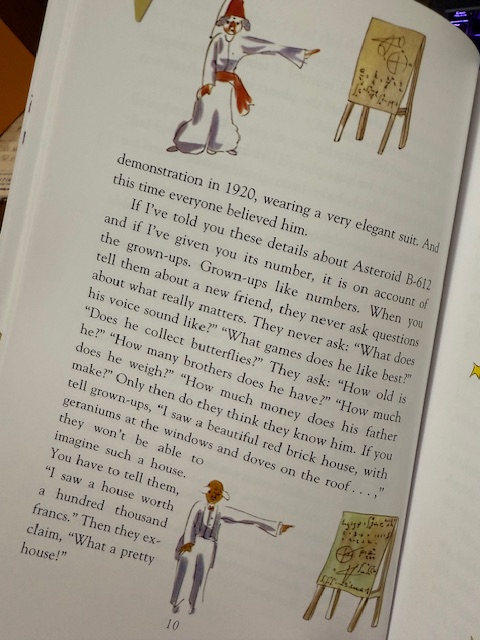
“Grown-ups like numbers,” the Prince says. “When you tell them about a new friend, they never ask questions about what really matters. They never ask: ‘What does his voice sound like?’ ‘What games does he like best?’ ‘Does he collect butterflies?’”
Oh, the gasp I gasped while reading this section. The absolute mundanity of “small talk,” which has always made me feel not just bored, but actively uncomfortable. Why? Maybe because I don’t care much about the questions people are supposed to ask in those moments. What do you do? Where do you live? The way I ask how are you and actually mean it and wish people would answer honestly. Wish that I could answer honestly, too. Like the Prince, I think humanity would be a lot better off if we stopped wondering how much money we make or where we went to school and instead got to know one another by sharing our favorite songs, teaching each other our favorite games, and connecting over the joys in our lives that keep getting us out of bed in the morning; the things that make us who we really are, not just our living, but our aliveness.
To Be Useful
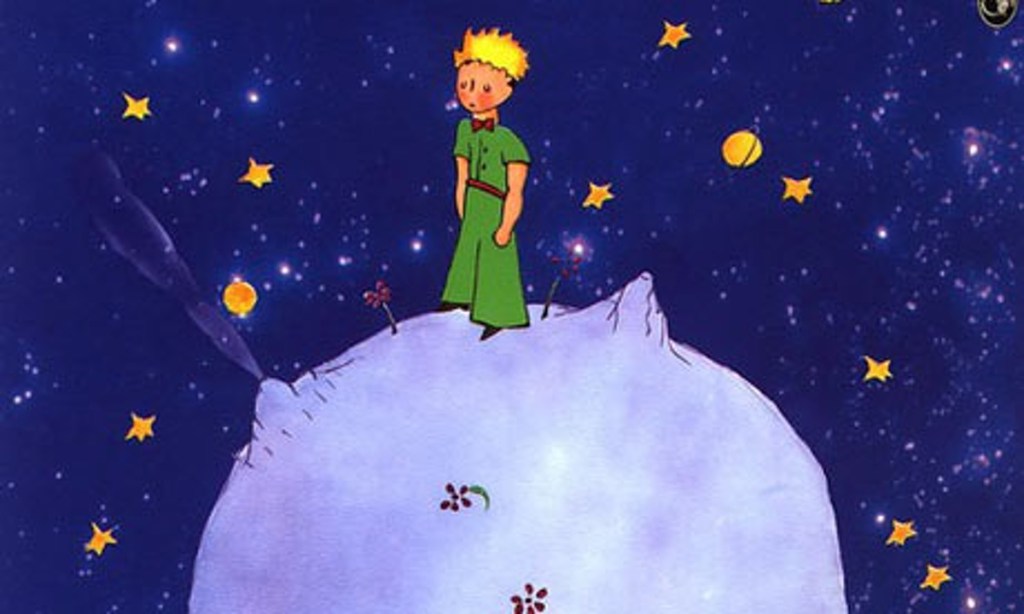
Perhaps the most moving anecdote in the first half of this little gem of a book, though there have been many life lessons already, is the Prince’s interaction with the lamplighter. After vising a few little planets on his journey, planets filled with the vain and egotistical, the self-involved and deluded, he meets at last a lamplighter who is faithfully following orders to ignite and extinguish his lamp with each sunrise and sunset. Unfortunately, his little planet is so small and has begun turning so fast, that he’s been forced to do this every couple of seconds, without rest.
“Now that man would be despised by all the others, by the king, by the very vain man, by the drunkard, by the businessman. Yet he’s the only one who doesn’t strike me as ridiculous. Perhaps it’s because he’s thinking of something besides himself” (43).
To be useful. To engage in a purpose that is bigger than oneself, that helps others and has meaning. Isn’t this, along with the charge to be kind, the noblest pursuit? As the American Presbyterian clergyman Nicholas Murray wrote, “Do all the good you can; in all the ways you can; to all the people you can; and just as long as you can.” A society who lives in this way might be the only kind that “doesn’t strike me as ridiculous.”
Up Next
In February and March, we will be reading Swann’s Way by Marcel Proust, which is the first book in his famous cycle, In Search of Lost Time. I’ve chosen the Lydia Davis translation from Penguin Classics and will be posting the full reading schedule soon. Hope you will join us!
Meditation
“The proof of the little prince’s existence is that he was delightful, that he laughed, and that he wanted a sheep.” –Antoine de Saint-Exupéry
May you be well,
Love,
~Adam


 Contemplative Reading Project
Leave a comment